
Ensuring children safety is a top priority for caregivers and educators alike. In many preschool classrooms, children frequently explore their surroundings, touching objects, climbing, and moving around with curiosity. While this exploration is essential for learning and development, it can also pose potential risks. Understanding how to maintain a safe environment while promoting healthy growth is vital for children aged 0–8. Safety measures help prevent injuries, illnesses, and accidents, while also fostering confidence and independence in young learners.
Protecting children isn’t just about avoiding harm; it’s about creating a world where they can explore, learn, and grow fearlessly.
Daily routines, including hygiene, nutrition, and play, significantly influence a child’s well-being. Caregivers can create structured yet flexible strategies that balance exploration with protection. For example, proper handwashing practices and clean play areas reduce the spread of germs, while age-appropriate toys prevent choking hazards. Research indicates that safe learning environments enhance cognitive, social, and emotional development (UNICEF, 2023).
This guide offers practical, actionable advice for caregivers and preschool teachers. It covers hygiene practices, nutrition, accident prevention, emergency preparedness, and general caregiving strategies. Following these guidelines ensures that children can explore, learn, and grow in a secure, nurturing environment. By incorporating these strategies, caregivers can confidently support both the physical and developmental needs of children while maintaining children safety in everyday routines.
Basic Hygiene and Care
Maintaining child hygiene is essential for preventing infections and supporting overall health. In many preschool classrooms, children frequently share toys and materials, which increases the risk of illness. Simple hygiene practices can make a significant difference.
- Regular Bathing: Ensure children are bathed daily with mild, child-friendly soap to remove dirt and prevent skin infections.
- Proper Nail Care: Trim nails carefully to avoid scratches and infections. Do this when children are calm or asleep.
- Clean Diaper Area: Change wet diapers promptly and clean thoroughly to prevent rashes and fungal infections. Use unscented baby powder if needed.
- Scalp Care: Wash children’s hair with gentle shampoo and rinse thoroughly to avoid fungal infections and dermatitis.
According to Piaget’s cognitive development theory, children at this stage learn through sensory experiences. Clean and comfortable children are more likely to engage in exploration and learning activities effectively.
Choosing Safe Clothing
Clothing can affect comfort, hygiene, and safety. Tight or restrictive clothing may cause discomfort and skin irritation, whereas loose clothing allows free movement and air circulation.
- Loose-Fitting Clothes: Choose breathable fabrics that allow movement and reduce skin irritation.
- Seasonal Clothing: Dress children appropriately for the weather to avoid overheating or cold stress.
- Secure Fasteners: Check zippers, buttons, and snaps to ensure they do not pose a choking hazard.
Montessori emphasizes a prepared environment that promotes independence. Wearing comfortable clothing helps children engage in daily activities confidently.
Creating a Safe Environment
Safety extends beyond personal hygiene to the physical space where children spend time. Properly designed spaces reduce risks of injury and support learning.
- Good Lighting and Ventilation: Ensure rooms have natural light, clean air, and minimal dust to promote a healthy environment.
- Safe Sleeping Areas: Provide separate, waterproof bedding for young children, ideally near the caregiver’s area.
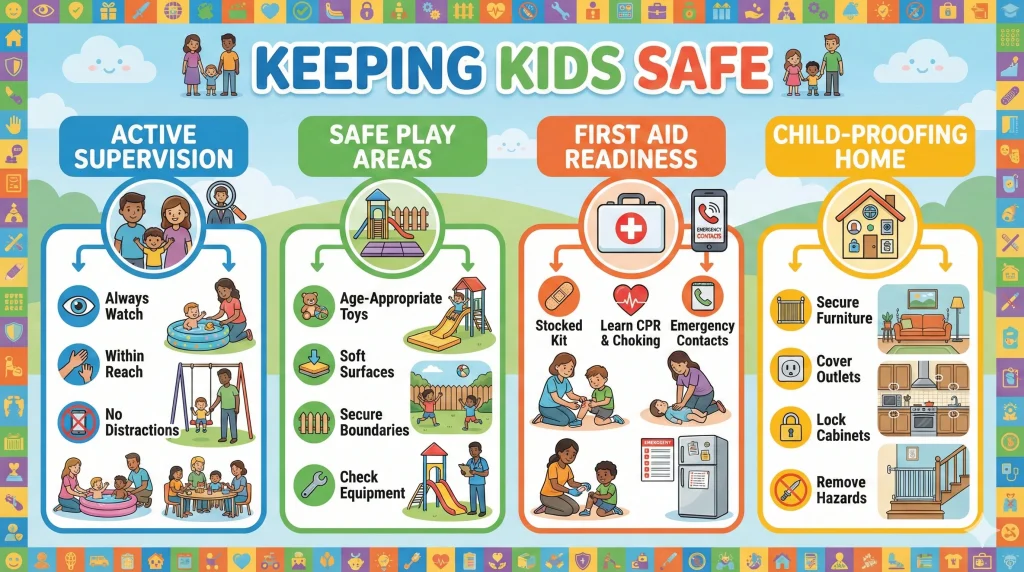
- Secure Furniture: Anchor heavy furniture and remove sharp-edged objects to prevent accidents.
- Safe Play Areas: Use age-appropriate toys and materials, ensuring that small parts do not pose choking hazards.
Vygotsky emphasizes social learning and scaffolding. A safe and well-organized environment allows children to interact and explore collaboratively under guided supervision.
Feeding and Nutrition
Proper nutrition supports growth, immunity, and cognitive development. Caregivers play a crucial role in providing healthy feeding routines.
Breastfeeding
- Breast Milk: Provides essential nutrients and strengthens emotional bonding. Feed on demand and maintain good nipple hygiene.
- Maternal Diet: Mothers should consume a balanced diet to ensure high-quality milk for infants.
Bottle Feeding
- Alternative Feeding: If breastfeeding is not possible, safely prepared cow’s milk can be used. Boil and cool milk before feeding.
- Clean Bottles: Sterilise bottles regularly and store in a dry, hygienic place to prevent bacterial growth.
Identifying Allergies
- Monitor Reactions: Observe children for signs of allergies to foods, fabrics, or cosmetics.
- Avoid Triggers: Remove identified allergens from the child’s environment to maintain comfort and health.
Research shows that balanced nutrition supports neural development and strengthens immunity, which contributes to overall children safety (Harvard Center on the Developing Child, 2022).
Preventing Illness and Infection
Preventing illness is a core component of children safety. Young children are vulnerable to infections due to developing immune systems.
- Mosquito Nets: Reduce exposure to vector-borne diseases such as malaria and dengue by using nets around sleeping areas.
- Calm Sleeping Environment: Ensure quiet, dark, and comfortable spaces to improve sleep quality, which supports growth and immunity.
- Handwashing Routine: Teach children to wash hands before meals, after using the toilet, and after outdoor play.
Erikson’s psychosocial theory highlights the importance of trust and security. Children who feel safe and protected are more likely to develop confidence and social skills.
Monitoring Development
Tracking growth and developmental milestones helps identify potential concerns early. Observation and documentation are essential for informed caregiving.
- Record Growth: Measure height and weight regularly and note significant changes in behavior or skills.
- Monitor Motor Skills: Track walking, grasping, and coordination to ensure typical developmental progression.
- Observe Social and Emotional Skills: Watch interactions with peers and caregivers to assess emotional development.
Regular monitoring aligns with evidence-based practices and helps prevent developmental delays (UNICEF, 2023).
Toilet Training and Cleanliness
Introducing toilet training supports independence and hygiene. Early, consistent guidance helps children adapt smoothly.
- Start Gradually: Introduce potty training around ten months using age-appropriate equipment.
- Clean Equipment: Sanitize potty seats before and after use to prevent infection.
- Positive Reinforcement: Encourage children through praise and gentle guidance during training.
According to Montessori principles, structured routines and independence foster confidence and skill development.
Handling Health Issues and First Aid
Recognizing distress signs and providing immediate care ensures children safety during unexpected situations.
- Distress Signals: Watch for excessive crying, fever, vomiting, diarrhea, or difficulty breathing, and seek medical assistance promptly.
- First Aid Kit: Maintain sterile cotton, dressing materials, antiseptics, ointments, and forceps. Keep emergency contacts accessible.
- Medicine Storage: Store medicines separately with clear dosage instructions.
Emergency Response Tips
- Choking: Lay the child on their stomach with the head lower than the chest and gently press the back. Call emergency services if necessary.
- Poisoning: Remove the substance and seek immediate medical attention. Avoid inducing vomiting for corrosive substances.
- Burns: Apply cool water and cover with sterile cotton before seeking medical care.
- Drowning: Remove the child from water, clear airways, perform resuscitation if needed, and contact medical professionals.
- Electric Shock: Disconnect the source, assess breathing, perform CPR if required, and call for emergency help.
Safety During Travel
Travel presents unique risks. Appropriate precautions ensure children remain safe outside the home or classroom.
- Car Seats and Seat Belts: Use age-appropriate car seats and ensure children are secured during travel.
- Identification Cards: Carry ID cards with contact details to aid reunification if separation occurs.
- Supervised Walking: Always accompany young children during walks or outdoor activities to prevent falls and injuries.
A safe child is a confident child — every precaution we take today builds the courage they carry tomorrow.
Conclusion
Maintaining children safety requires consistent attention to hygiene, nutrition, environmental hazards, and emergency preparedness. Caregivers and teachers play a central role in ensuring children can explore, learn, and develop safely.
- Establish regular hygiene routines including bathing, nail trimming, and clean clothing.
- Create safe, well-ventilated, and well-lit play and sleeping environments.
- Provide balanced nutrition and monitor for allergies or intolerances.
- Track growth and developmental milestones regularly.
- Introduce toilet training and hygiene practices appropriately.
- Maintain a well-stocked first aid kit and know emergency procedures.
- Use car safety measures and supervise children during outdoor activities.
By implementing these strategies, caregivers foster secure and nurturing spaces where children can thrive. Consistent vigilance, combined with evidence-based practices, ensures that children grow up healthy, confident, and protected.
