
Managing a mixed-age Early Childhood Development (ECD) classroom can feel like a puzzle at first. Children of different ages, abilities, and interests are learning together, which can seem challenging. But with the right strategies, this type of classroom can be one of the most rewarding learning environments for both children and teachers.
Mixed-age classrooms are common in early childhood settings around the world. They allow younger children to learn from older peers and give older children the chance to develop leadership and mentoring skills. For teachers, knowing how to structure learning, manage behavior, and create a supportive environment is key.
What You Will Learn
In this guide, you’ll get clear, practical strategies to confidently manage a mixed-age ECD classroom. You will learn how to:
- Understand how mixed-age classrooms work and why they support stronger child development.
- Set up your space using learning centers, flexible grouping, and adaptable materials.
- Plan lessons that build core skills, support different levels, and promote cooperative learning.
- Use effective behavior management, including clear expectations and positive reinforcement.
- Create smooth routines and transitions that keep the classroom calm and organized.
- Strengthen relationships with children and parents across age groups.
This guide will help you teach with more confidence, reduce daily stress, and build a thriving, well-managed mixed-age classroom. Keep reading to apply these insights directly to your professional practice.
Before you start reading, tell us a little about your experience.
Understanding Mixed-Age Classrooms
A mixed-age classroom is a learning environment where children of different ages, usually spanning 2–3 years, learn together.
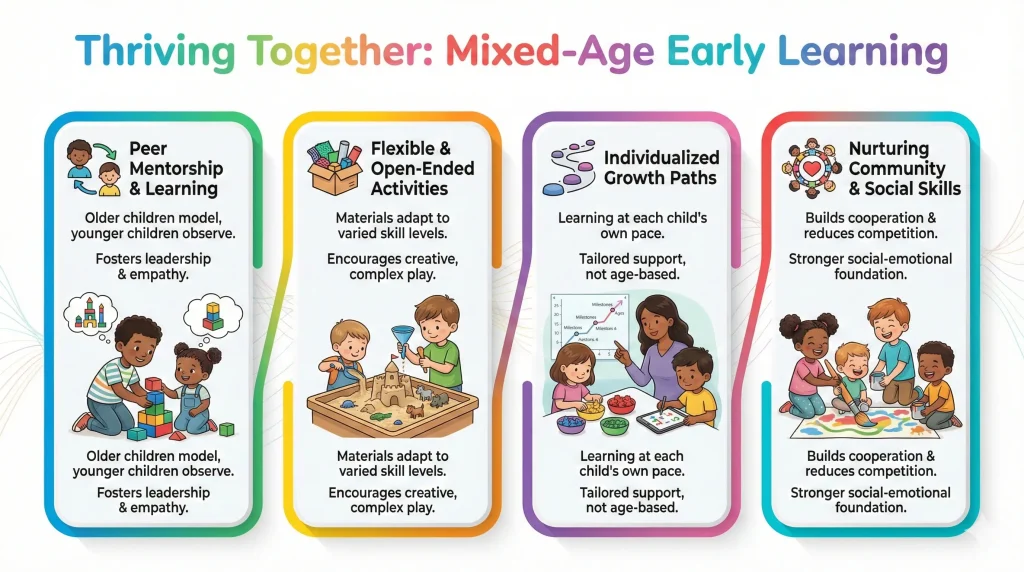
Benefits of Mixed-Age Classrooms
- Peer Learning: Younger children observe and learn from older children.
- Leadership Skills: Older children gain confidence by helping and guiding younger peers.
- Individualized Learning: Teachers can tailor activities to different developmental levels.
- Social Skills: Children learn to cooperate, share, and respect others’ abilities.
- Emotional Growth: Both younger and older children develop empathy and patience.
Research indicates that mixed-age classrooms support social, emotional, and cognitive development, helping children learn self-regulation and cooperative behaviors (Copple & Bredekamp, 2009).
In a mixed-age classroom, every child becomes both a learner and a teacher, growing together in curiosity and confidence.
Preparing Your Classroom for Mixed-Age Learning
The physical environment of your classroom can make a huge difference. A well-prepared space allows children of all ages to participate in meaningful activities.
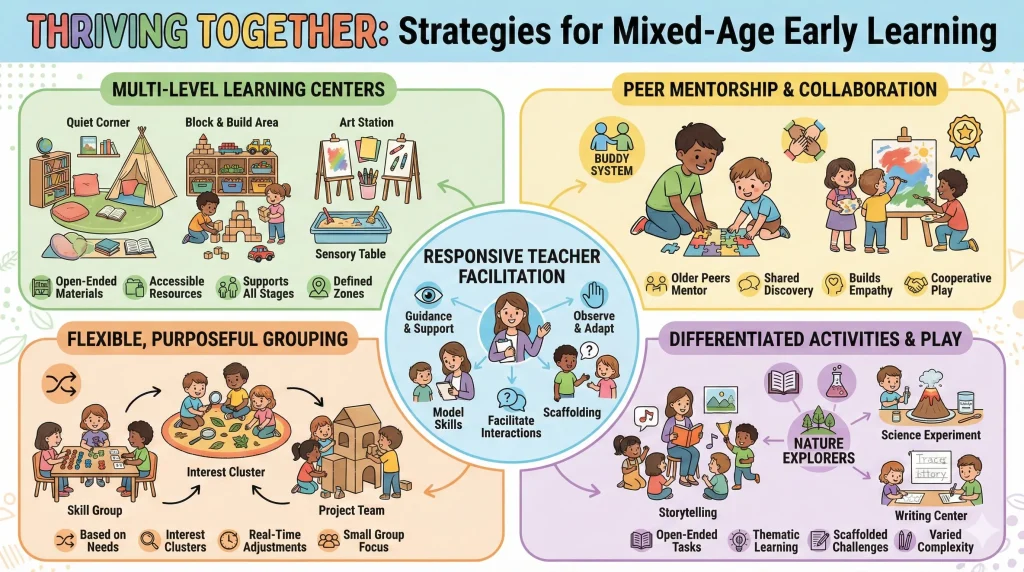
1. Create Learning Centers
Learning centers help organize activities and make supervision easier. Examples include:
- Reading Corner: Comfortable seating with books for multiple reading levels.
- Art and Craft Station: Materials for simple to complex projects, allowing creativity for all ages.
- Block/Construction Area: Puzzles, blocks, or building materials that encourage problem-solving.
- Science/Discovery Table: Simple experiments or nature exploration for hands-on learning.
Tip: Ensure each center has materials for younger and older children, and rotate activities weekly to maintain interest.
2. Use Flexible Grouping
Grouping children strategically allows for better learning experiences:
- Ability-Based Groups: Group children with similar skill levels for specific tasks.
- Interest-Based Groups: Children who share interests, like drawing or building, can work together.
- Peer Mentoring: Pair older children with younger ones to guide activities.
Tip: Rotate groups to encourage social interaction and learning from different peers.
3. Adapt Materials and Activities
Every activity should have options for different skill levels:
- Simplify Tasks for Younger Children: Shorter instructions, simpler steps, or smaller pieces.
- Extend Tasks for Older Children: More complex problems, additional steps, or leadership opportunities.
- Provide Choices: Choice boards allow children to select tasks based on their ability and interest.
Tip: Visual cues, picture instructions, and hands-on demonstrations help younger children understand tasks independently.
Planning Lessons for Mixed-Age Classrooms
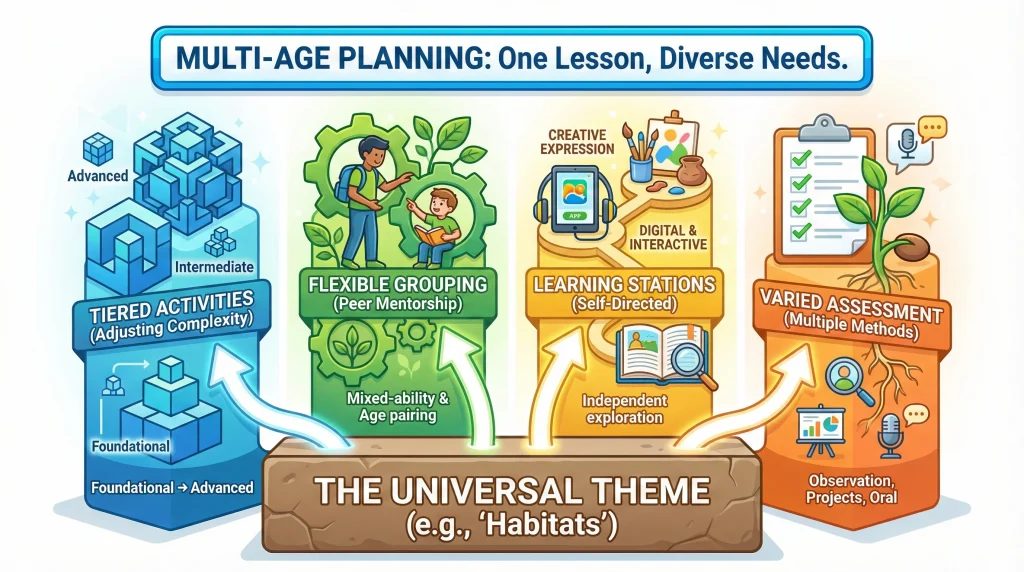
1. Focus on Core Skills
Choose themes or skills that all children can engage with, but at different levels. Examples include:
- Math: Counting for younger children, simple addition/subtraction for older children.
- Language: Storytime with comprehension questions for older kids and vocabulary focus for younger kids.
- Science: Observing plants and animals, with older children recording findings and younger children exploring textures or colors.
2. Layer Learning Experiences
Layering means designing activities that allow multiple learning levels:
- Younger children explore, play, or imitate.
- Older children analyze, create, or teach.
- Teachers guide both groups simultaneously, providing support where needed.
Tip: Ask questions that encourage problem-solving for all ages, but at age-appropriate levels.
3. Integrate Cooperative Learning
Cooperative learning encourages teamwork and helps manage the class naturally:
- Team-based games and group projects.
- Assign roles based on abilities, like “helper,” “recorder,” or “leader.”
- Celebrate group achievements to build a sense of community.
Managing Behavior in a Mixed-Age Classroom
1. Set Clear Expectations
- Use simple, clear rules that apply to all children.
- Use visual reminders like charts or posters.
- Model desired behavior for younger children.
2. Positive Reinforcement
- Praise specific actions: “I like how you helped your friend share the blocks.”
- Encourage older children to mentor younger ones, reinforcing their leadership skills.
3. Conflict Resolution
- Teach children to use words to express feelings.
- Guide them to negotiate and compromise.
- Intervene only when necessary, allowing children to develop problem-solving skills.
Tip: Observing patterns of behavior helps anticipate conflicts and prevent them proactively.
Routines and Transitions
- Daily Schedule: Keep predictable patterns for meals, play, and learning time.
- Visual Timetables: Pictures help younger children understand the sequence of activities.
- Transition Strategies: Songs, timers, or short games can make transitions smoother.
Tip: Allow flexibility for older children to explore longer activities without disrupting younger children.
Building Relationships with Children and Parents
- Individual Attention: Spend time with each child to understand their needs and interests.
- Parent Communication: Share updates on development and strategies to support learning at home.
- Encourage Family Involvement: Invite parents to participate in classroom activities or workshops.
Tip: Positive parent-teacher relationships make managing a mixed-age classroom easier.
Actionable Tips for Daily Classroom Success
- Observe Regularly: Keep notes on each child’s development, behavior, and social interactions.
- Encourage Leadership: Older children can lead songs, clean-up routines, or small group activities.
- Promote Inclusion: Highlight achievements from all age groups.
- Use Differentiation: Always provide tasks with multiple levels of difficulty.
- Rotate Activities: Prevent boredom and encourage engagement by changing materials weekly.
- Model Respect and Empathy: Demonstrate positive social behaviors consistently.
Conclusion
Managing a mixed-age ECD classroom requires patience, creativity, and planning, but it offers incredible benefits for children and teachers alike. By organizing learning centers, adapting activities, fostering cooperative play, and maintaining clear routines, teachers can create an inclusive and engaging environment where all children thrive.
Remember: a successful mixed-age classroom values every child’s abilities, encourages peer support, and celebrates diversity in learning. With consistent observation, positive reinforcement, and flexible planning, teachers can make mixed-age classrooms an inspiring place for early childhood learning.
The magic of a mixed-age ECD classroom lies not in perfect order, but in the beautiful, intentional chaos where curiosity, empathy, and confidence are born
Frequently Asked Questions
What is a mixed-age classroom in early childhood education?
A mixed-age classroom in early childhood education is an educational setting where children of different ages and developmental stages learn together. This approach fosters peer learning, social interaction, and individualized instruction, allowing older children to mentor younger ones while younger children benefit from modeling behaviors and skills.
What are the main benefits of mixed-age classrooms for children?
Mixed-age classrooms support younger children through peer modeling, help older children develop leadership and empathy, and create a more natural, family-like learning environment. Research shows that mixed-age groups enhance social, emotional, and cognitive growth.
How can teachers manage different learning levels in a mixed-age ECD classroom?
Teachers can use strategies such as small-group activities, learning centers, differentiated tasks, and flexible routines. These approaches help meet each child’s developmental needs while keeping the whole class engaged.
What activities work well in a mixed-age early childhood classroom?
Activities like open-ended play, storytelling, sensory stations, art projects, outdoor exploration, and role-play are ideal because children can participate at their own level. These activities allow for natural collaboration among different age groups.
How can teachers maintain classroom discipline in mixed-age settings?
Clear expectations, consistent routines, positive reinforcement, and age-appropriate behavioral guidance help maintain order. Encouraging older children to support younger peers also builds a cooperative classroom culture.
References
- Copple, C., & Bredekamp, S. (2009). Developmentally Appropriate Practice in Early Childhood Programs. National Association for the Education of Young Children (NAEYC).
- Pianta, R. C., & Kraft-Sayre, M. (1999). Successful Kindergarten Transition: Your Guide to Connecting Children, Families, and Schools. Brookes Publishing.
- National Association for the Education of Young Children. (2021). Mixed-Age Classrooms: Benefits and Strategies. NAEYC.
